

Working with horses can provide us with numerous benefits to both our physical and mental health.

Horseback riding can help improve your balance and coordination, strength, muscle tone and even mental health. (Franz W / Pixabay)
By: Caelan Beard | December 2022
Ask any horse person why they love horses and they’ll likely have an answer for you – whether it’s the feeling of freedom that comes from riding, the connection with another living being or feeling more in tune with the natural world. But there’s also significant physical and mental health benefits to working with horses.
Equine therapy is well-known for both physical and mental rehabilitation, but anyone can experience significant health benefits through time spent with horses. Read on for more ways in which working with horses can benefit your personal health and wellness.
Physical Health Benefits
The Canadian Society for Exercise Physiology (CSEP) recommends that “for health benefits, adults aged 18-64 years should be physically active each day, minimize sedentary behaviour, and achieve sufficient sleep.” This includes performing at least 150 minutes of moderate to vigorous physical activities (MVPA) throughout each week and limiting daily sedentary time to eight hours or less. The benefits of following these guidelines are significant, and can include “lower risk of death, cardiovascular disease, type 2 diabetes, weight gain, several cancers, and improved bone health.”
However, according to Stats Canada, evidence indicates that “a large proportion of Canadian adults are at increased risk for poor health outcomes.” Currently, the majority of Canadians (82.5 per cent) don’t meet physical activity guidelines of at least 150 minutes of MVPA per week and are sedentary for an average of 9.6 hours a day.

Subscribe to the Canadian Thoroughbred newsletter and get an exclusive bonus digital edition!
We’ll send you our regular newsletter and include you in our giveaways. PLUS, you’ll receive our exclusive digital edition of Handicapping Tips for Thoroughbred Racing.SIGN UP
Luckily, there’s a number of ways in which horses can help us meet exercise goals.
Exercise Motivation

Horses are good at motivating you to exercise because, well, they need to exercise themselves! Studies show that pets benefit your health by keeping you active, and riding horses is great exercise.
Plus, horses can make it more fun to get moving, and it’s a lot easier to exercise when it’s enjoyable.
Cardiovascular Health
Riding and caring for horses can also benefit heart health. According to the American Heart Association, horseback riding is good aerobic exercise, which can benefit your cardiovascular health. Exercise (like horseback riding) also lowers your blood pressure.
Did you know that almost 80 percent of premature heart disease and stroke can be prevented through healthy behaviours, including physical activity? Physical activity is extremely important when it comes to preventing heart conditions and can help lower your risk of heart disease.
Muscle Conditioning

Riding requires strength, and horseback riding works some specific muscle groups. Riding can help improve muscle tone and strengthen muscles in several areas, including:
- legs (quads, hamstrings, glutes and adductors)
- core (obliques and transverse abdominis)
- back (erector spinae and lats)
Balance and Coordination
Balance and coordination are important aids to joint stability and fall prevention. Improved balance and coordination are also beneficial to building better posture – which is especially important to work on as increasingly sedentary lifestyles and narrow movement patterns are contributing to the average person having terrible posture. Bad posture can lead to limitations like hunched shoulders and reduced upper-back mobility.
Horseback riding can help improve your balance and coordination, as riding requires you to stay upright and stable as the horse might make quick or even jarring movements. You may also have to coordinate a lot of different things at once while riding, such as your leg pressure, rein pressure and body position.
Mental Health Benefits
According to the Canadian Mental Health Association, 1 in 5 people in Canada will experience a mental health problem or illness in any given year. While mental illness “affects people of all ages, education, income levels, and cultures,” mental health and symptoms of mental illness may be worsened by systemic inequalities like racism, gender-based violence and difficulty accessing mental health supports, among others. Poor mental health or mental illness is also sometimes linked to problematic substance use, which may be a coping strategy for untreated trauma or pain.
The prevalence of mental health problems in Canada is not insignificant; but for some of those individuals affected, could working with horses help?
There are mental health benefits of exercise, and completing optimal levels of movement for your physical health has also been linked to “improved anxiety, depression, dementia, cognition, and quality of life.” But working with horses can provide mental health benefits that go even further.
There’s been a growing body of evidence to support the effectiveness of equine-assisted therapy to treat a variety of mental health issues. Equine-assisted therapy can be used to treat depression, anxiety, ADHD, addiction, trauma, PTSD, dementia and other mental health difficulties. Participating in equine-assisted therapy can also have a number of benefits.
Stress Relief
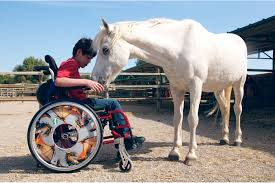
Horses can have a calming presence for people. Studies show that even spending as little as 10 to 15 minutes with horses increases endorphins (a happy, feel-good hormone) and decreases cortisol (a hormone that controls stress and arousal).
Additionally, working with horses can help us learn to manage our emotions and reduce stress. In a recent study on the effectiveness of equine-assisted therapy for treating first responders with PTSD, participants learned how to better regulate emotions including both anxiety and anger.
Confidence and Problem-solving
Working with horses can also help us to improve our confidence and problem-solving abilities. The benefits of equine-assisted therapy include boosted confidence, as participants must take on new challenges, master new skills and often get out of their comfort zone. Additionally, participants are empowered by learning to problem-solve and communicate with the horse non-verbally. This can help them to move past feelings of helplessness and towards greater self-efficacy.
Sense of Responsibility
One of the benefits we can gain from working with and caring for an animal can be an improved sense of responsibility. In equine-assisted therapy, for example, participants must learn to put aside negative emotions in order to focus on developing a caring and nurturing relationship with the horse.
After all, matter how our day is going, the horse still needs to be fed, watered, and exercised, day in and day out. This can also help us with establishing a healthy routine.
